
Pakistan’s freshwater ecosystems are facing a growing and serious threat from the invasive fish species. Environmental experts have warned that invasive fish are endangering local biodiversity, damaging natural water systems, and putting the livelihoods of fishing communities at risk. According to the World Wide Fund for Nature Pakistan, immediate legal and environmental action is needed to prevent long-term ecological harm.
According to Muhammad Moazzam Khan, Technical Adviser at WWF Pakistan, the fish was first introduced into Pakistan’s waters during the 1960s and later again in the 1980s to increase food production. He explained that the species is known for its strong, armour-like body and exceptional survival abilities. It competes with native fish for food and habitat, preys on smaller fish, spreads diseases, and causes serious damage to freshwater ecosystems.
Moazzam Khan said that the introduction of foreign fish species in Pakistan is not a new practice. As early as 1928, brown trout and rainbow trout were introduced in the mountainous regions of Khyber Pakhtunkhwa. Later, species such as Mozambique tilapia, common carp, goldfish, and grass carp were brought in to boost fish production and control unwanted aquatic weeds, often without fully considering their long-term
On January 4, 2026, an unusual fish was brought from a small lake near Sukkur to Karachi Fish Harbour, creating confusion among fishermen and officials who initially described it as something “from outer space” because no one could identify it. The fish was later confirmed to be an Amazon sailfin catfish, a non-native species with a thick, armour-like body covered in hard bony plates.
Originally from Latin America, this species is popular worldwide as an aquarium fish but is considered a highly successful invasive species. It entered natural water bodies accidentally and has now spread widely across Sindh and lower Punjab. Experts warn that since the Amazon sailfin catfish has established itself on a large scale in Pakistan, its control or complete elimination is no longer possible.
How Non-Native Fish Entered Pakistan’s Waters
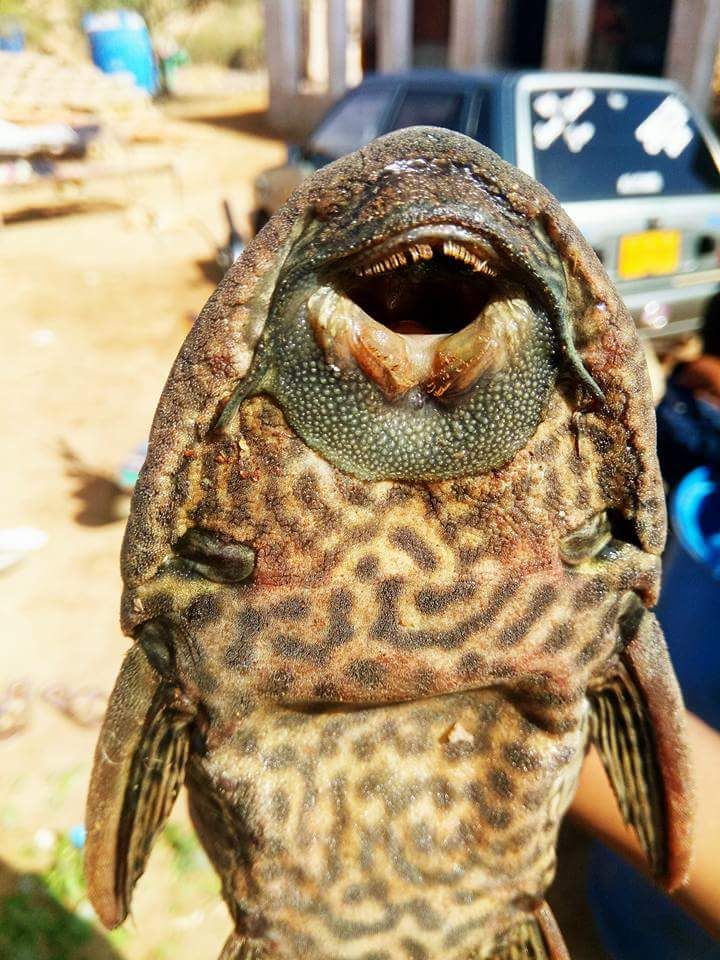
Recent surveys revealed the presence of the Amazon sailfin catfish in major water bodies, including Karachi Fish Harbor and areas near Sukkur. Native to Latin America, this species has now spread rapidly across Sindh and southern Punjab. Experts explain that such fish were originally introduced decades ago to increase food production and boost aquaculture, without fully understanding their environmental impact.
Over time, Pakistan also introduced several foreign fish species, such as trout, tilapia, and different types of carp, to control weeds and improve fish yield. While these efforts aimed to support food security, they ignored the delicate balance of local ecosystems. In the 1960s and 1980s, the introduction of tilapia and other fast-breeding species caused a sharp decline in native fish populations, especially in lakes like Manchar and Keenjhar. This decline directly affected local fishermen, leading to economic and social challenges that continue today.
Why Invasive Fish Are a Serious Environmental Risk
Invasive fish like the Amazon sailfin catfish are known for their hard armour, strong survival skills, and high reproduction rate. They compete with native fish for food and space, prey on smaller species, spread diseases, and disturb the natural structure of rivers and lakes. Once these species establish themselves in a water system, controlling or removing them becomes extremely difficult.
WWF Pakistan has also confirmed the presence of other non-native species, such as red-bellied pacu, in the Chenab River and nearby regions. Environmental specialists warn that unchecked import, weak quarantine systems, and even the promotion of exotic fish farming on social media are accelerating the problem. They urge strict monitoring of fish imports, stronger regulations, and coordinated action by climate and environmental authorities to protect Pakistan’s aquatic life before the damage becomes irreversible.
Protecting freshwater biodiversity is not just an environmental issue; it is essential for food security, local economies, and the health of Pakistan’s natural heritage.