A simple question from a friend recently sent me on an unexpected journey into Karachi’s educational history.
A friend asked me, “Do you know where the University of Sindh was functioning in Karachi between 1947 and 1951?”
I had no answer.
I thought it would be easy to find. After all, the University of Sindh is one of the oldest universities in Pakistan, and its history is closely linked with the early years of the country. Surely, someone in Karachi would know where its first premises were located.
I called a senior citizen of Karachi and asked him the same question. He, too, was unaware of it.
That made me more curious.
So I turned to ChatGPT and typed a straightforward question: “Can you please find in which building the University of Sindh was first established in Karachi?”
The answer was long, but not very satisfying. It explained that the University of Sindh was established in Karachi in April 1947 under the Sindh University Act. At that stage, however, it was primarily an examining university rather than a teaching university with its own campus.
The university’s first Vice Chancellor was Dr Abu Bakar Ahmad Haleem, better known as A.B.A. Haleem. During its Karachi period, the university mainly functioned as an examining body, conducting examinations and overseeing affiliated educational institutions.
The answer also explained that when the university later moved to Hyderabad, it initially had neither a proper university building nor adequate facilities and resources. Allama I.I. Kazi subsequently transformed it into a teaching university, with classes beginning in the New Vidyala High School building, which is now known as the Elsa Kazi Campus.
But it was not a satisfactory reply. Also it reminded me the disclaimer of ChatGPT saying that it can make mistakes. So it proved that my original question remained unanswered.
University of Sindh: Which building in Karachi?
I then asked ChatGPT to dig deeper and in support I gave it a hint: look for the earliest building associated with the University of Karachi. I thought that when University of Sindh was moved to Hyderabad in 1951, the same year University of Karachi was established.
This time, the search became much more interesting.
ChatGPT came up with what appears to be the strongest contemporary evidence so far. It referred to Maneck B. Pithawalla’s An Introduction to Karachi, published in 1950 with a website link of reputable Urban resource centre.
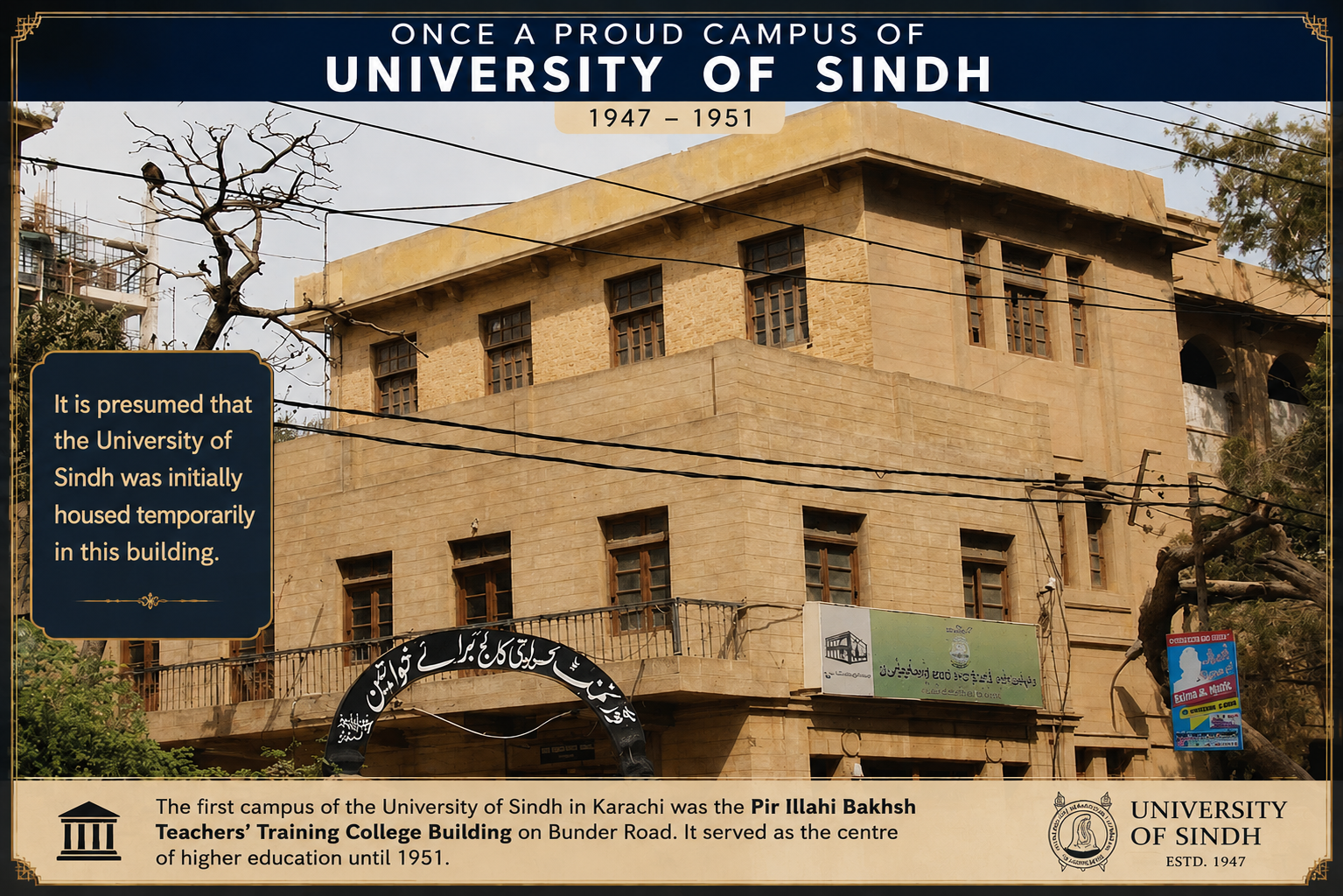
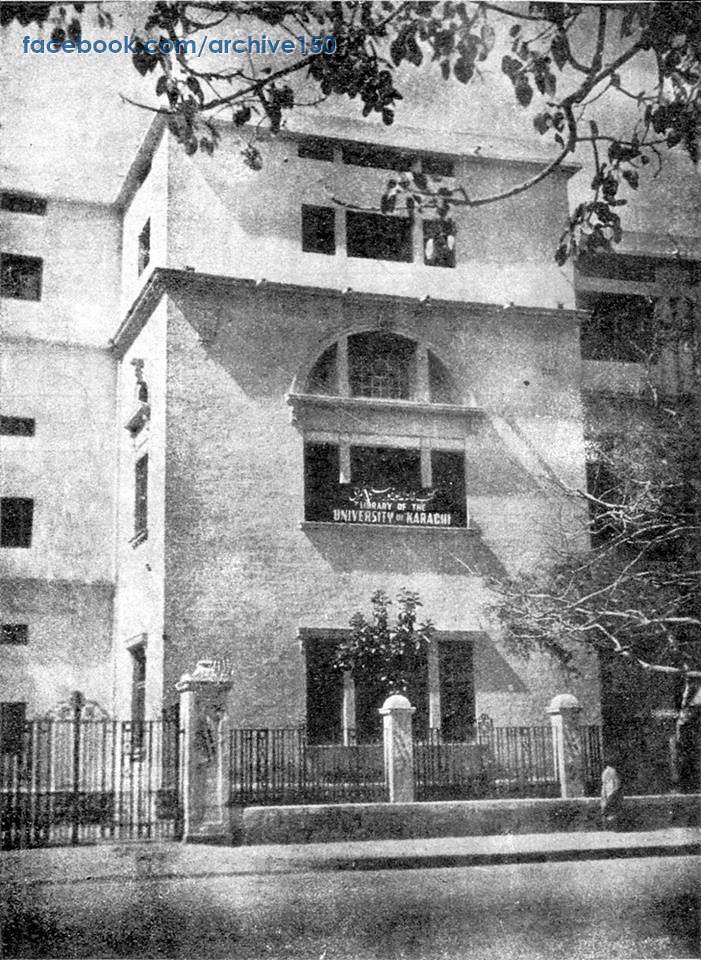
Pithawalla wrote that after the Sindh University Act was passed in 1947, the University “came into being the same year” and was temporarily located in the Pir Illahi Bakhsh Teachers’ Training College Building.
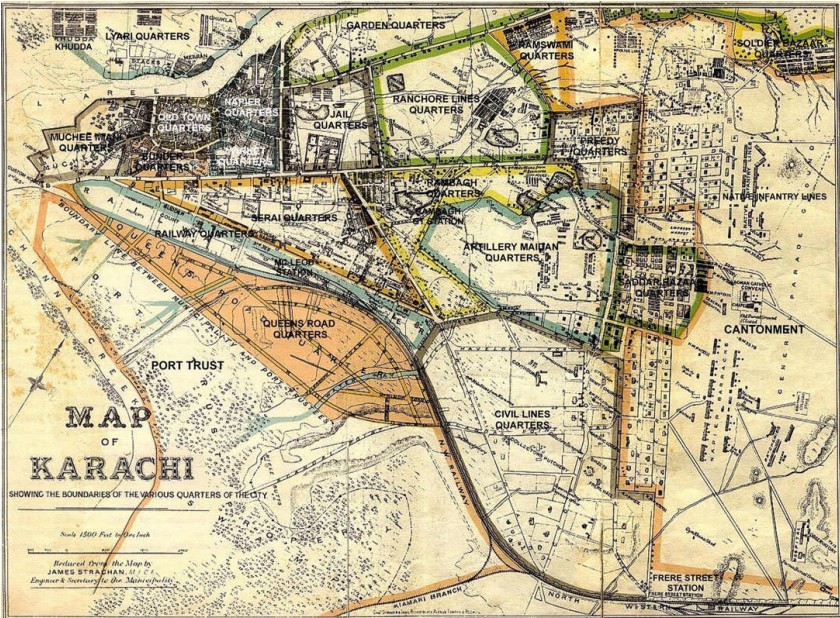
According to that article the University of Sindh was established in the densely populated area of Ranchore Line, at Princess Street. This is present-day Chand Bibi Road, located behind Civil Hospital.
The building of Karachi Girls College now stands here, where a government school was once located. The school was later shifted to Kotwal Building, and the University of Sindh was established at this site. But ChatGPT was not sure of the fact. The surrounding historic buildings, which were being used as hostels by Dow Medical College, were converted into hostels for male and female students arriving from Bombay, interior Sindh, Punjab and other areas.
Missing piece
Pithawalla described the building as the most magnificent school building on Bundar Road and noted that it had just been completed.
Suddenly, the story became much more tangible.
The University of Sindh was not simply an institution that existed somewhere in Karachi on paper. For a period, it actually occupied a particular building in the city: the Pir Illahi Bakhsh Teachers’ Training College Building on Bundar Road.
There is another fascinating detail.
The university had originally been planned as a permanent university township beyond the District Jail on the Bundar Road Extension. In other words, there was an ambitious vision for a permanent university campus in Karachi.
That plan, however, did not become the university’s immediate reality. Instead, the institution temporarily operated from the Teachers’ Training College building.
And here the story takes another interesting turn.
Many people, including perhaps some residents of Karachi, may confuse the early history of the University of Sindh with that of the University of Karachi. The two institutions belong to different chapters of Karachi’s educational history.
The University of Karachi was established in 1951, four years after the University of Sindh was established.
And the University of Karachi itself did not begin its life at the sprawling campus we know today on University Road.
According to the University of Karachi’s own official prospectuses, the university was initially housed in a compound consisting of a few buildings on old Princess Street, near Civil Hospital, Karachi.
Princess Street is now known as Chand Bibi Road.
So, if we mentally travel back to the Karachi of the late 1940s and early 1950s, the city’s university history looks very different from what we see today.
There were no vast university campuses, imposing academic blocks or sprawling student facilities.
Universities were beginning their lives in existing buildings in old town area.
The University of Sindh was temporarily housed in the Pir Illahi Bakhsh Teachers’ Training College Building on Bundar Road. A few years later, the newly established University of Karachi began its journey from buildings around Princess Street.
I curiously asked ChatGPT if it was established in the same building where currently the Federal Urdu University’s Abdul Haq Campus is located. The ChatGPT, however, said that It would not be historically accurate to say that the present Abdul Haq Campus of the Federal Urdu University was the first building of the University of Karachi.
There is, however, a reason for the confusion.
The Abdul Haq Campus, on Baba-e-Urdu Road, was originally Federal Urdu Arts College, and the college itself dates back to 1949. It later became part of Federal Urdu University when FUUAST was established in 2002.
These details may appear small, but they tell us something important about Karachi and Pakistan’s early educational history.
The country was barely born. Institutions were being created, reorganised and moved. Plans for permanent campuses existed on paper, while universities often had to begin wherever suitable buildings were available.
And perhaps that is what makes this little piece of history so fascinating.
A question that initially seemed almost trivial led to a building, a road, an abandoned campus plan and two of Pakistan’s oldest universities.
It also offered me a useful reminder about artificial intelligence.
My first interaction with ChatGPT produced an answer that sounded convincing but did not actually answer the question. It was only after I pushed it to dig deeper and pointed it towards a specific historical clue that it produced the reference to Pithawalla’s 1950 book.
That experience demonstrated something we should always remember when using AI for historical research: a confident answer is not necessarily a verified answer.
The real work begins when we ask: Where did this information come from?
In this case, a contemporary source published in 1950 appears to provide the crucial clue.
But there is still a question worth pursuing: What does that Teachers’ Training College building look like today, and does the original structure still exist?
Here is the reply: I cannot yet establish the exact present-day building with enough confidence to say, “this is the site.” The evidence does, however, narrow the location considerably. In its conclusion, ChatGPT said: The first premises of the University of Sindh in Karachi were the Pir Illahi Bakhsh Teachers’ Training College building on Bunder Road, a newly completed government educational building that the University shared with the Training College.
The building was in the old Bunder Road educational district around the N.J.V. School and Civil Hospital. Its present-day fate has not yet been conclusively established from the sources available online.
That may be the next stop in this little historical investigation.
After all, sometimes the history of a great institution can not be rediscovered by simply finding the building where it once began.